



Issues to Pay Attention to When Transporting Cable Reels
Electric wires and cables are generally wound on cable reels for transportation, storage, and laying. Cables shorter than 30 meters can also be coiled into circles, provided that the minimum bending radius allowed for the cable is not exceeded, and they should be secured with at least four ties for transportation. In the past, cable reels for mining cables were mostly made of wood, but now they are commonly made of steel frames, as steel frames are more durable, less prone to damage, and beneficial for protecting the cables. Additionally, these steel cable reels can be reused multiple times, making them more economical than wooden cable reels.
2021-12-09

Wires and cablesGenerally coiled on cable reels for transportation, storage, and laying. Cables shorter than 30m can also be coiled into circles without exceeding the minimum bending radius allowed for the cables, and must be secured with at least four ties for transport. Historically, cable reels for mining cables were mostly made of wood, but now they are mostly made of steel frames, as steel frames are sturdier, less likely to break, beneficial for protecting the cables, and these types of reels can be reused multiple times, making them more economical than wooden reels.
1. Transportation of cable reels
Cable reels are generally transported using cranes. When transporting cable reels on vehicles, they should be placed upright and securely fastened, with padding on the sides to prevent the reels from shaking, colliding with each other, or tipping over.
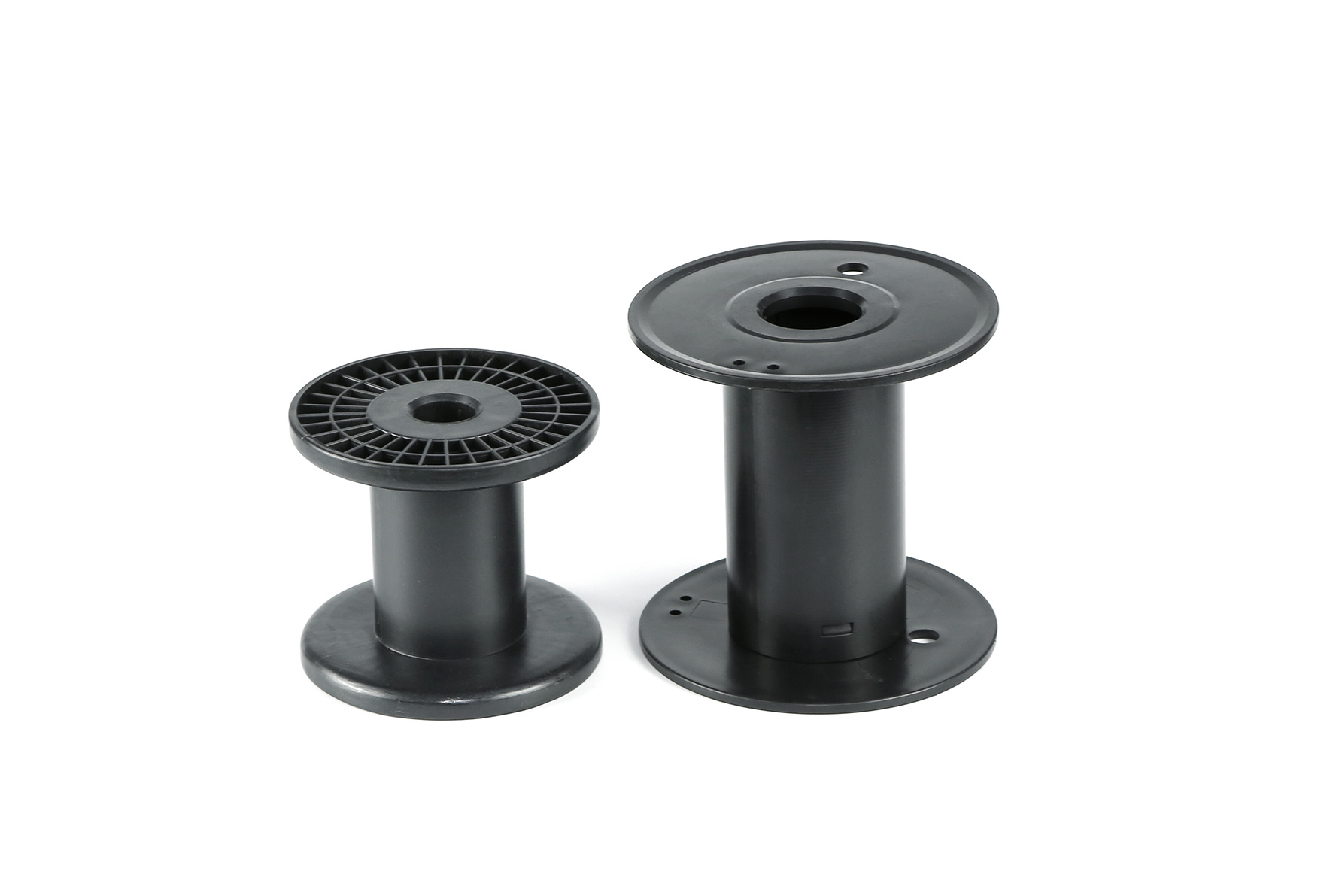
Before transporting cables, they must be inspected. The cables should be intact, and the ends should be sealed tightly; the inner and outer edges of the cables and the oil pipes between the oil-filled cables and the pressure box must be securely fastened on the reel to prevent loosening due to vibrations during transport; the oil valve provided on the pressure box should be in the open position, and the pressure gauge should indicate normal; the outer surface of the cables should be protected to prevent damage from external objects. If any issues are found, they must be resolved before loading.
Cable reels must not be loaded lying flat. Lying flat will cause the cables to loosen and can easily damage the cables and the reel.
2. Unloading cable reels
When unloading, if there is no lifting equipment, it is prohibited to push the cable reel directly off the transport vehicle. Pushing it off directly not only damages the cable reel but also makes the cables susceptible to mechanical damage. For smaller cable reels, a ramp made of plywood can be constructed, and the cable reel can be slowly rolled down the ramp using a hoist or rope.
When loading and unloading cable reels, it is prohibited to lift two reels at the same time.
3. Turning cable reels
When turning cable reels on the ground, it must be controlled within a small distance. The direction of turning must follow the direction indicated on the side of the cable reel (along the winding direction of the cable). Turning in the opposite direction will cause the cable to unwind and loosen, potentially falling off.
Cable reels use safety instructions similar to those for power plugs that we commonly encounter in daily life, designed for the convenience of daily production and life. Therefore, the electrical safety of moving cable reels is similar to that of everyday power strips.

Whether it is common issues in the workplace or safety measures when using power strips, both have similarities. So what basic electrical safety knowledge should we understand? First, moving cable reels must not be overloaded.
To ensure that there is no overload operation in the power circuit, each product is equipped with over-temperature load and leakage protection switches, which will automatically trip when overloaded.
Secondly, high-power sockets are usually equipped with three-core power sockets to ensure safe grounding during the plugging process; all panels on moving cable reels are equipped with three-hole grounded sockets.
Thirdly, in daily life, when using moving cable reels, do not replace fuses with copper wire or thin iron wire, nor use wire-wrapped wires instead of heating wires or other substitutes.
Fourth, when people leave, the power must be turned off, and the main power switch must also be turned off to prevent accidents when making calls. In industrial settings, if a power outage occurs, the welding personnel should be contacted to check for issues or repair before it can be used again.
Fifth, do not place moving cable reels in damp environments or near flammable materials. Although industrial cable reels often have moisture-proof features, prolonged exposure to damp environments can still affect their normal operation. Additionally, in office environments with flammable materials, electrical loads or power ignition can lead to fires.
In summary, during the transportation and handling ofcable reels, the key issue is to avoid damaging the cables and the insulation of the cables. Although this is a well-known issue, it still occurs frequently, so it should be given sufficient attention.
Contact Us
Mailbox:
wangyumei630@163.com
Tel:
086-769-85707005
Mobile:
086 132 6843 4928
Address:
Building 3, Wanshan Factory, No. 38 Hulin Road, Humen Town, Dongguan City
CONTACT US
ZhenHua Packing Machinery
Tel: 086-769-85707005
Mobile: 086 132 6843 4928
Email: wangyumei630@163.com
Address: Building 3, Wanshan Factory, No. 38 Hulin Road, Humen Town, Dongguan City
ZhenHua Packing Machinery
Follow our media for more information
Online message
If you are interested in our products, please leave your contact information
SAF Coolest v1.3 设置面板 GAGSE-ZGYF-JASXE-ZXE
无数据提示
Sorry, the current column has no content for the time being.!
You can view other columns or returnHome Page